

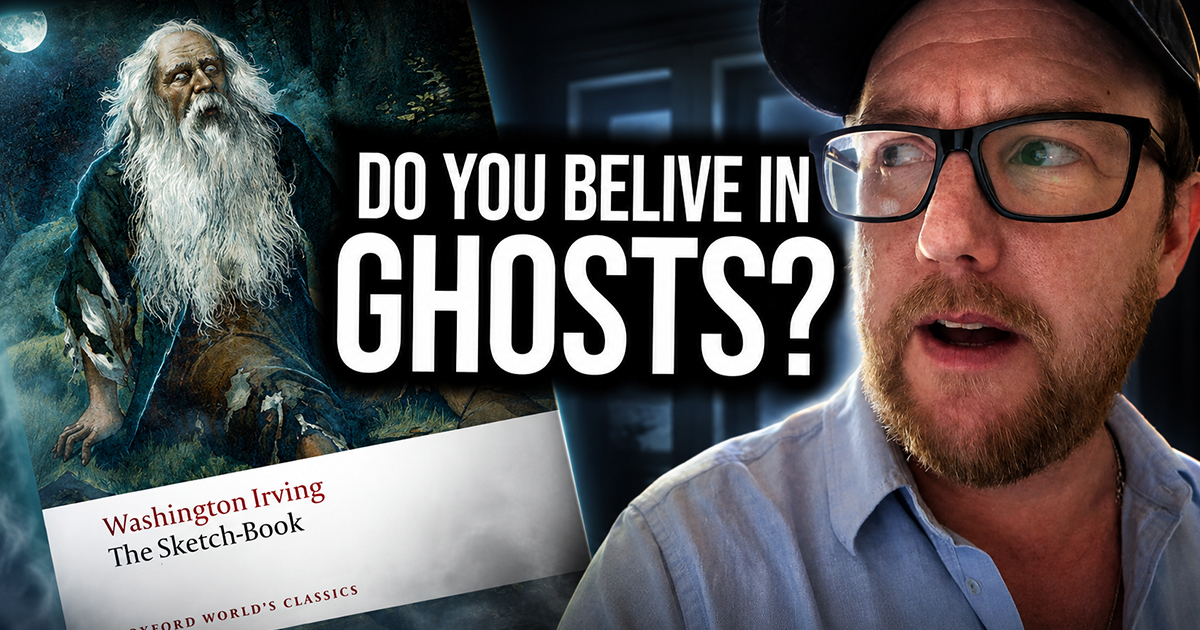
Do You Believe in Ghosts? Washington Irving, Travel and the Magic of Folklore
Do you believe in ghosts? What about ghouls, goblins, and things that go bump in the night?
It’s a question I’ve been asked countless times.
In fact, I was asked it just the day before I recorded this video (which you can watch below, or over on my lovely YouTube channel) in the Q&A session for one of my Ghosts and Folklore of Wales talks.
It’s also a question I don’t have a nice simple answer for – ask me today and I’ll give you a different answer tomorrow – and I’m always looking for new ideas and perspectives.
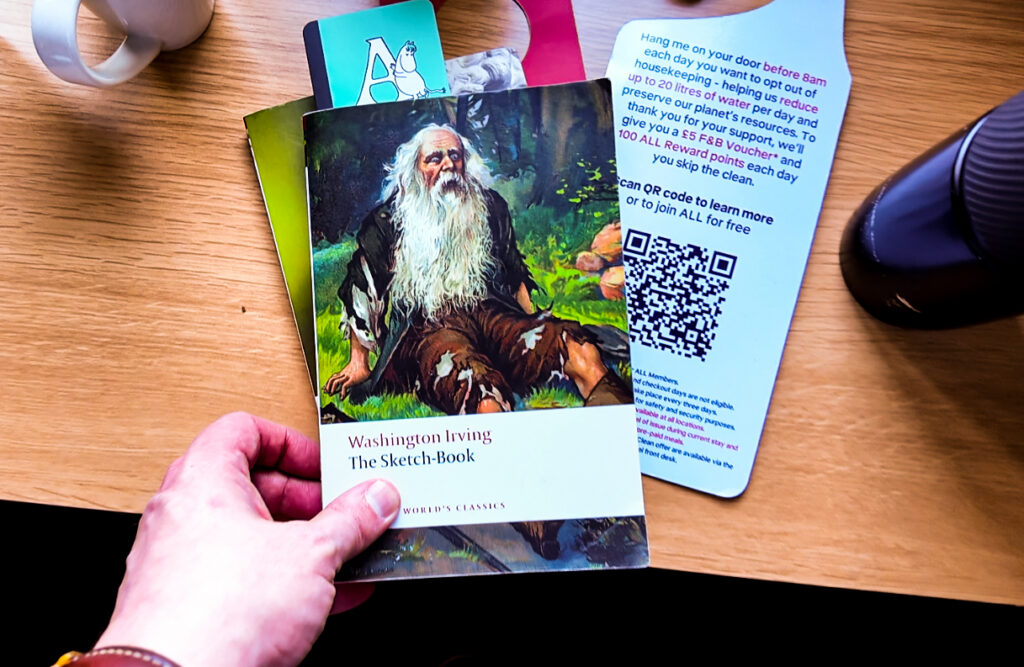
And so it was that, as I had travelled to Southampton – to spend the night ahead of a week working as a cruise ship speaker, which set sail for the high seas the next morning – I was reading Washington Irving’s The Sketch-Book of Geoffrey Crayon, Gent.
Withing that wonderful book, And there was something that caught my attention. Several things, in fact.
Washington Irving and the Weird and Wonderful
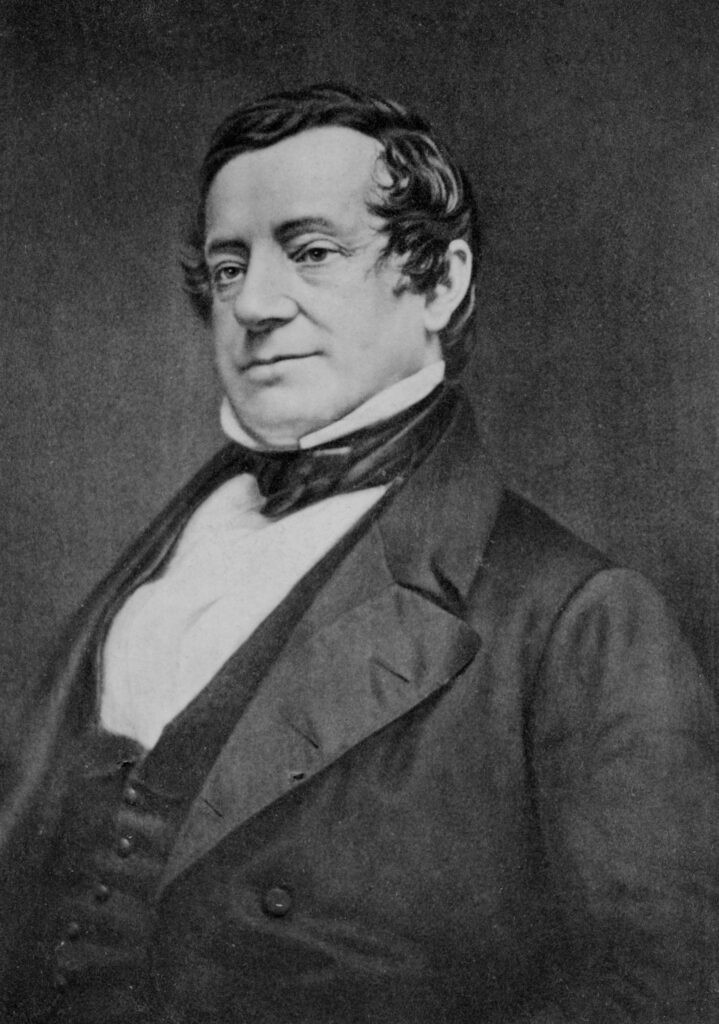
Best known today for The Legend of Sleepy Hollow – which also happens to be my favourite Tim Burton film – Irving was fascinated by the picturesque landscapes, history and folklore he encountered during his travels in Britain, experiences which would feed into his writing for an American audience.
He spent time travelling through England and Wales, absorbing the stories attached to the places he visited and transforming many of those impressions into literature for an American audience.
And while reading the introduction to the Oxford World’s Classics edition, I came across a section discussing Irving’s own attitude towards the fantastical stories he encountered while travelling: the legends, relics, local anecdotes and tales of supernatural happenings.
His attitude was wonderfully open-minded. When it comes to the weird and wonderful, he writes:
“I am always of easy faith in such matters, and I’m ever willing to be deceived.”
He goes on:
“Whether deceit is pleasant and costs nothing, I am therefore a ready believer in relics, legends, and local anecdotes of goblins and great men, and would advise all the travellers who travel for their gratification to be the same.”
And then comes the part that most resonated:
“What is it to us whether these stories are true or false, so long as we can persuade ourselves into the belief of them, and enjoy all the charm of the reality?”
I love that idea.
Not because I think we should abandon our critical faculties and simply believe every ghost story, legend or supernatural claim we encounter. Quite the opposite.
I’ve spent a large part of my career researching these stories, and one of the things that interests me most is trying to understand where they came from, why people believed them and how they changed over time.
But there is another question that is just as interesting as whether a story is literally true.
What does the story do to the way we experience a place?
I thought about that quite a lot while travelling around the Netherlands on that cruise ship.
Imagine walking through an old town like Stratford-upon-Avon – as Irving did – and hearing stories about ghosts, curses, strange happenings or people who supposedly encountered something supernatural there.
Does knowing that the story probably isn’t literally true make the place less interesting?
I don’t think it does.
If anything, the opposite can happen.
Stories add a little magic to places – sometimes a lot of magic.
A ruined castle becomes more than a ruin if you know the legends attached to it. A cave becomes more atmospheric if someone tells you that dragons or fairies were once believed to inhabit it. A stretch of coastline becomes something different when you know the old stories associated with the sea.
And Sleepy Hollow after the shades of night have fallen takes on a much eerier edge after reading Irving’s story.
Do you believe in ghosts?
When I wrote my first book of ghost stories, Ghosts of Wales: Accounts from the Victorian Archives, I began the introduction with a very simple question: Do you believe in ghosts?
I thought it would be a funny opening line, as that’s the question I get asked more than any other, but it also made a killer first sentence – do you believe in ghosts?
For me, it’s not about a yes or no answer, what interests me is that the people who had these encounters – the ones who woke with a fright, felt a cold hand on their shoulder, saw their furniture levitate and heard a scream in the dead of night – they certainly believed, regardless of any doubts you or I might have.
They told the stories. They recorded them. They passed them down. And now I do much the same in my books – documenting, preserving and ensuring that these tales are not lost to time.
That doesn’t mean we have to accept every supernatural explanation offered to us. We can be sceptical and still be fascinated. We can question a ghost story while enjoying the atmosphere it creates.
That, I think, is what Irving was getting at.
And it is particularly appropriate when travelling.
There is something wonderful about arriving somewhere unfamiliar and allowing yourself to see it through the stories that have accumulated around it. You notice things differently. A landscape becomes more than scenery. A building becomes more than architecture. A journey becomes more than getting from A to B.
As Irving put it:
“What is it to us, whether these stories be true or false, so long as we can persuade ourselves into the belief of them and enjoy all the charm of the reality?”
That was very much the philosophy I took with me as I boarded the cruise, and the cruise after that, and the cruise after that.
Over the following week I would be travelling through the Netherlands, visiting Rotterdam and Amsterdam along the way – videos of which will also be popping up on my channel.
And in between the talks, I did what I always enjoy doing when I travel: exploring, looking at the buildings, visiting museums, and always with an ear open for the local lore.
Do you believe in ghosts, ghouls and goblins?
Does it matter when, taking a leaf out of Washington Irving’s book, we simply give ourselves permission to enjoy the possibility? Sometimes that little bit of imagination is all you need to make a place feel magical.
Until next time, nos da!

